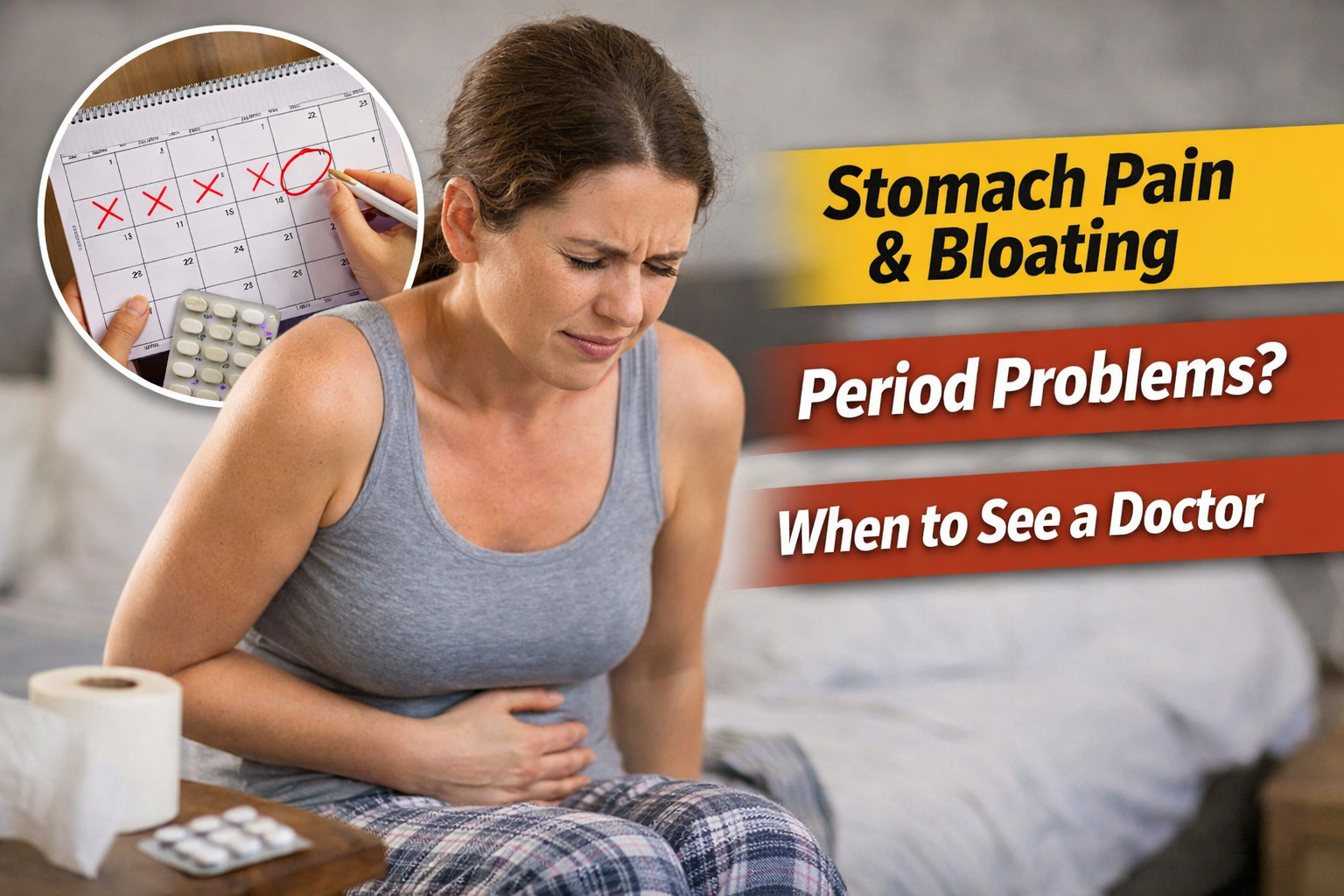
IBS Symptoms in Females: What to Watch For, Why Periods Matter, and When to See a Doctor
Irritable bowel syndrome, or IBS, is one of the most common reasons women live with recurring abdominal pain, bloating, constipation, diarrhea, or an exhausting mix of both. It is real, it can seriously affect quality of life, and it often overlaps with stress, sleep disruption, pelvic discomfort, and anxiety about what is going on in the body. But IBS is also important to define correctly: it is not the same thing as inflammatory bowel disease, it does not cause visible damage to the digestive tract, and by itself it does not raise colon cancer risk.
Women are up to two times more likely than men to develop IBS, and many women notice that the condition does not feel completely random. Symptoms often cluster around hormonal shifts, especially around the menstrual cycle, and constipation-predominant IBS appears to be more common in women than in men.
That said, there is not a separate “female-only” IBS disease. The core symptom pattern is still the same: recurring abdominal pain together with a change in bowel habits. What often differs in women is how the symptoms show up, what makes them worse, and what other problems may overlap with them.
What IBS actually is
IBS is a disorder of gut-brain interaction. In plain English, that means the digestive tract and the nervous system are not coordinating normally. The bowel may move too quickly or too slowly, and the gut may become unusually sensitive to normal amounts of gas or stool. That is one reason IBS can feel intense even when routine tests do not show ulcers, bleeding, or structural damage.
Doctors usually diagnose IBS from the symptom pattern rather than from a single scan or lab test. Under the Rome IV criteria, IBS means recurrent abdominal pain, on average at least 1 day a week in the last 3 months, associated with at least two of these: the pain is related to bowel movements, stool frequency has changed, or stool form has changed. Symptoms must have started at least 6 months before diagnosis.
Are IBS symptoms in females different?
The main symptoms are not different in a basic diagnostic sense. Women still tend to have the same IBS building blocks as everyone else: belly pain, cramping, bloating, constipation, diarrhea, or mixed bowel habits. But several patterns stand out more often in women: constipation is more common, bloating can be especially prominent, and symptoms may worsen during menstrual periods.
Women with IBS also more often report overlapping chronic pain issues, including chronic pelvic pain, and some studies suggest they may report more fatigue, anxiety, depression, and lower quality of life than men with IBS. That does not mean these symptoms prove IBS, but it does help explain why IBS in women can feel broader and more disruptive than “just a stomach problem.”
The most common IBS symptoms in females
1. Recurrent abdominal pain or cramping
This is the symptom that anchors the diagnosis. IBS pain often comes in waves. It may improve after a bowel movement, get worse before one, or fluctuate throughout the day. Some people describe cramping, others describe pressure, aching, or a heavy, irritated feeling low in the abdomen.
2. Constipation
Constipation is one of the most common IBS patterns in women. Stools may be infrequent, hard, dry, or difficult to pass. You may feel like you are straining too much or that the bowel movement was incomplete even after you go. Evidence suggests IBS with constipation is more prevalent among women than among men.
3. Diarrhea
Some women have IBS-D, or diarrhea-predominant IBS. This can mean loose stools, urgency, repeated trips to the bathroom, and cramping that eases after passing stool. Even when constipation is the more classic female pattern overall, diarrhea can still be part of the picture, especially during certain phases of the menstrual cycle.
4. Alternating constipation and diarrhea
Many people do not stay in one neat category. IBS-M, or mixed IBS, means constipation and diarrhea both occur over time. This can be one of the most frustrating patterns because the body feels unpredictable, and what helps on one day may make things worse on another.
5. Bloating and abdominal fullness
Bloating is one of the most common and most disruptive IBS complaints. Some women feel puffy after meals, tight in the upper or lower abdomen, or visibly distended by the end of the day. Bloating is common in IBS overall and is often reported more prominently by women.
6. Gas and the feeling that you have not fully emptied
IBS can create a persistent sense that the bowel movement was incomplete. Excess gas, pressure, and mucus in the stool can also happen. These are not the most dramatic symptoms, but they are part of why IBS can wear people down day after day.
Why IBS symptoms may feel worse around your period
This is one of the clearest ways IBS can feel different in women. Major patient resources from NIDDK, AGA, and the U.S. Office on Women’s Health all note that women with IBS often have more symptoms during their menstrual periods.
Research suggests bowel habits can shift across the cycle. During the menstrual phase, some women report more diarrhea, urgency, bloating, and abdominal pain. Constipation may become more noticeable during the luteal phase, when progesterone is higher. One study of premenopausal women with IBS found that patients were most symptomatic during menstruation and that bloating affected more than half of participants across all cycle phases.
The exact mechanism is still being worked out, but hormones and prostaglandins likely matter. Estrogen and progesterone can influence gut motility and pain sensitivity, while menstrual prostaglandins may speed up the bowel and intensify cramping. That helps explain why some women feel like their IBS suddenly “turns up the volume” around their period.
Pelvic pain, painful periods, and symptom overlap
One reason IBS can be tricky in women is that lower abdominal and pelvic symptoms do not belong to the bowel alone. Women with IBS more commonly report chronic pelvic pain than the general population, and overlap between IBS and pelvic pain occurs more often than chance alone would predict.
This matters in real life because IBS pain can overlap with menstrual cramps, pelvic floor problems, bladder discomfort, endometriosis-like symptoms, and other gynecologic conditions. If pain is strongly linked to bowel changes, IBS becomes more likely. If pelvic pain is severe, progressively worsening, unrelated to bowel movements, or associated with abnormal bleeding, painful sex, fever, or new urinary symptoms, it deserves a broader medical evaluation. That overlap is one reason self-diagnosis can miss something important.
When symptoms are not typical of IBS
IBS does not usually cause rectal bleeding, black stools, iron-deficiency anemia, unintentional weight loss, or symptoms that wake you from sleep. Family history of colorectal cancer, inflammatory bowel disease, or celiac disease also changes how doctors evaluate symptoms. These are warning signs that another condition may need to be ruled out.
See a clinician promptly if you have:
blood in the stool or black, tarry stools
unexplained weight loss
iron-deficiency anemia
nighttime diarrhea or pain that wakes you up
fever, vomiting, or persistent severe symptoms
a family history of celiac disease, inflammatory bowel disease, or colorectal cancer
How IBS is diagnosed
There is no single test that confirms IBS. Doctors usually make a positive diagnosis based on symptoms, medical history, and a physical exam, then use selected tests to rule out other conditions when needed. Depending on the symptom pattern, that may include blood tests, stool tests, celiac testing, a breath test for lactose intolerance or bacterial overgrowth, and sometimes endoscopy or colonoscopy.
That approach is important because not everyone with cramping and bowel changes has IBS. Celiac disease, inflammatory bowel disease, bile acid diarrhea, lactose intolerance, infections, pelvic disorders, and other causes may need consideration, especially if the story includes red flags.
What can help if you have IBS symptoms
Treatment depends on your symptom pattern, not just the IBS label. Doctors may recommend diet changes, lifestyle measures, medicines, probiotics, and mental health therapies. IBS is often managed best when the plan targets your dominant symptoms: constipation, diarrhea, bloating, pain, or period-related flares.
Diet is often the first place people start. NIDDK notes that some patients improve by increasing fiber, avoiding gluten, or trying a low-FODMAP diet. Soluble fiber appears more helpful than insoluble fiber for many people with IBS, and fiber should be increased gradually because too much too fast can worsen gas and bloating.
Lifestyle changes matter more than many people expect. Physical activity, stress reduction, and adequate sleep may improve IBS symptoms, and emotional stress can intensify pain, constipation, or diarrhea in people with IBS. Keeping track of meals, symptoms, stress, and cycle timing can be especially helpful for women whose symptoms seem hormonal or unpredictable.
Medication options depend on the pattern. For diarrhea, clinicians may use loperamide, rifaximin, eluxadoline, or in selected women with severe IBS-D, alosetron. For constipation, options can include fiber supplements, laxatives, lubiprostone, linaclotide, or plecanatide. Antispasmodics, certain antidepressants, and coated peppermint oil may help abdominal pain and global IBS discomfort in some patients.
Counseling is not “just for stress.” Mental health therapies are part of evidence-based IBS care because IBS is a gut-brain disorder. NIDDK and Mayo Clinic both note that counseling or other psychological therapies can help, especially when stress, anxiety, depression, or symptom fear are amplifying the cycle.
The bottom line
The main IBS symptoms in females are the same core symptoms seen in IBS overall: recurring abdominal pain, bloating, constipation, diarrhea, or mixed bowel habits. What often makes the female experience feel different is that constipation is more common, bloating can be more intrusive, chronic pelvic pain may overlap, and symptoms often worsen around menstruation.
If you keep having belly pain along with changes in bowel habits, do not assume it is “just stress,” but do not assume it is something dangerous either. IBS is common, real, and treatable. The right goal is not guessing at home forever. It is getting a proper evaluation, ruling out red flags, identifying your symptom pattern, and building a plan that fits your body.
Leave a Reply